
Improving NIV Mask Fit and Comfort for Patients with ALS
Amyotrophic lateral sclerosis (ALS) is a progressive neurodegenerative disease that affects the nerve cells responsible for controlling voluntary muscle movement. As these nerve cells deteriorate, muscles throughout the body weaken over time, including those involved in breathing. Respiratory muscle weakness can make it increasingly difficult for people with ALS to breathe effectively, particularly when lying down (Muscular Dystrophy Association 2024, “Maintaining Pulmonary Function with ALS”).
Graham, 58, has lived with ALS for nearly two years. After he began experiencing disrupted sleep, morning headaches, and daytime fatigue, his care team prescribed noninvasive ventilation (NIV) to support his breathing at night.
As Graham’s ALS progressed, weight loss and changes in his facial musculature made it increasingly difficult to maintain a secure and comfortable mask fit. Air leaks and pressure points disrupted his sleep, while progressive muscle weakness made independent mask adjustments more difficult.
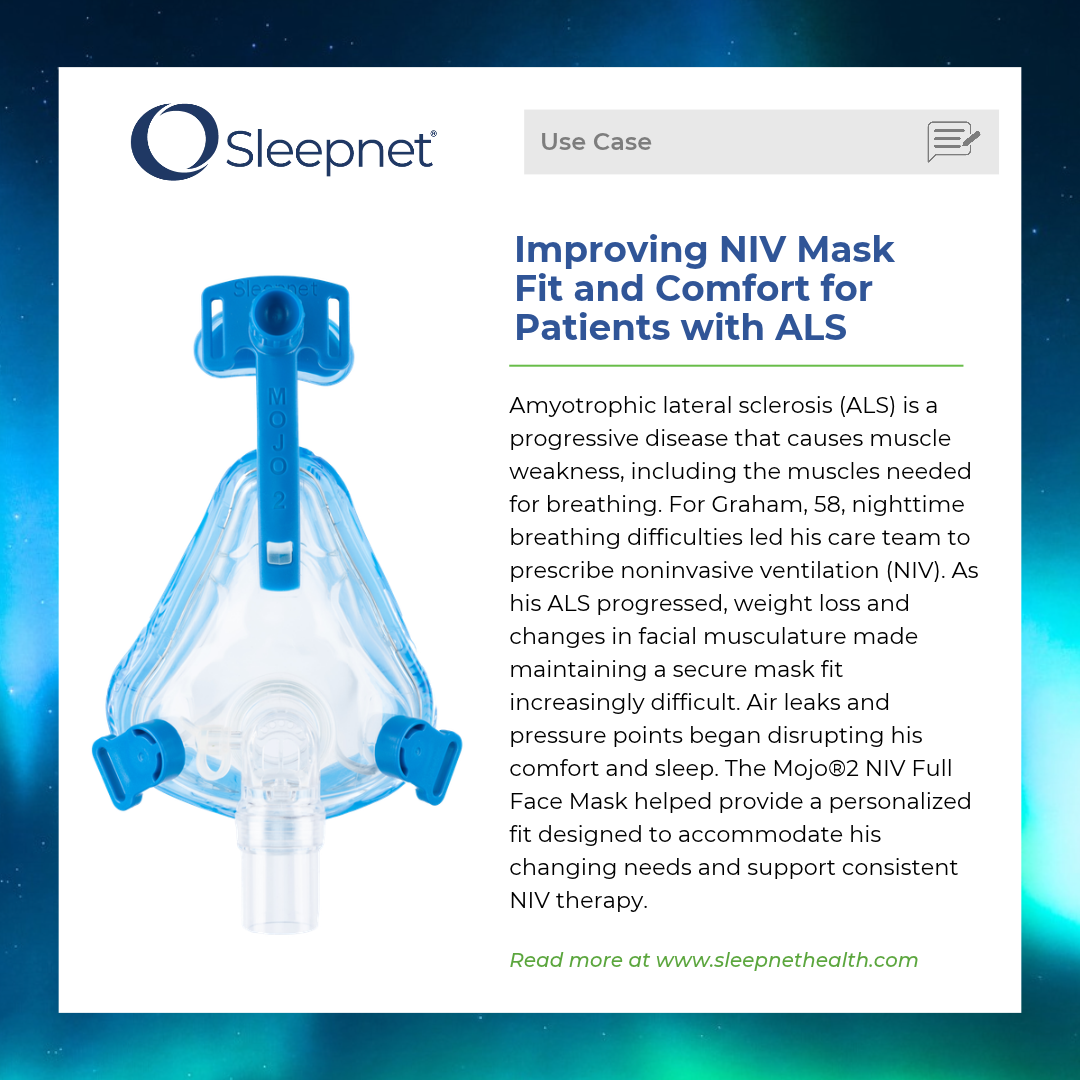
This use case explores how Sleepnet’s Mojo®2 NIV Full Face Mask helped accommodate Graham’s changing needs with a personalized fit designed to support comfort and consistent NIV therapy.
The Challenge
As ALS progresses, patients who use NIV therapy may face several mask-related challenges:
- Changing Facial Structure: ALS-related weight loss and changes in facial musculature can affect mask fit and create gaps around the cushion that contribute to air leaks (ALS United 2024, “Face ALS Symptoms: Identifying the Signs of ALS”).
- Discomfort During Extended Use: Progressive respiratory muscle weakness may increase the need for NIV support (ERS 2023, “How to Increase Noninvasive Ventilation Effectiveness in Bulbar Amyotrophic Lateral Sclerosis Patients”). Pressure around sensitive areas of the face can make longer periods of mask use uncomfortable.
- Difficulty Adjusting the Mask: Progressive muscle weakness in the hands may make it harder for patients to reposition or adjust their masks independently, increasing reliance on caregivers for assistance.
- Therapy Consistency: Air leaks and discomfort can disrupt sleep and interfere with consistent NIV use (PubMed 2018, “Continuous Noninvasive Ventilation for Respiratory Failure in Patients with ALS”).
Graham’s care team needed an NIV interface that could adapt to his changing facial contours, maintain a reliable seal, and remain comfortable during longer periods of use.
The Solution: Mojo®2 NIV Full Face Mask
Sleepnet’s Mojo®2 NIV Full Face Mask provided a personalized and comfortable interface for Graham that helped ease his NIV therapy. Here’s how:
- Custom Fit Technology: The Mojo®2 was gently shaped along the sides, top, and bottom of the mask to better match Graham’s individual facial contours. This allowed his caregiver and respiratory care team to personalize the fit as his facial structure changed while reducing the need for excessive headgear tension.
- Adjustable Forehead Support: The adjustment dial allowed the pressure of the AIR°gel® forehead cushion to be increased or decreased for a more individualized fit. This helped stabilize the mask and redistribute pressure away from the bridge of Graham’s nose.
- Soft AIR°gel Cushion: The soft, flexible AIR°gel cushion conformed comfortably to Graham’s face, helping to minimize air leaks, irritation, and pressure during extended periods of therapy.
- Full-Face Coverage: The Mojo®2 provided both nasal and oral coverage, supporting Graham’s prescribed NIV therapy even as changes in his breathing made it difficult to rely on nasal breathing alone.
Together, these features provided Graham with a more customized interface that supported comfort, stability, and consistent NIV use as his respiratory needs evolved.
Results
After transitioning to the Mojo®2 NIV Full Face Mask, Graham experienced fewer disruptive air leaks and less pressure around the bridge of his nose and forehead. Custom Fit Technology allowed the mask to accommodate changes in his facial contours, while the adjustable forehead support helped his caregiver fine-tune the fit without overtightening the headgear.
The AIR°gel cushion also helped maintain Graham’s comfort during longer periods of NIV use. With a more stable fit and fewer disruptions, Graham was able to use his prescribed therapy more comfortably and consistently.
Conclusion
For patients with ALS who require NIV, progressive changes in muscle strength, respiratory function, and facial structure can create ongoing mask fit and comfort challenges. An adaptable interface can help address these changes as respiratory needs evolve.
This article does not disclose or publish identifying customer information.