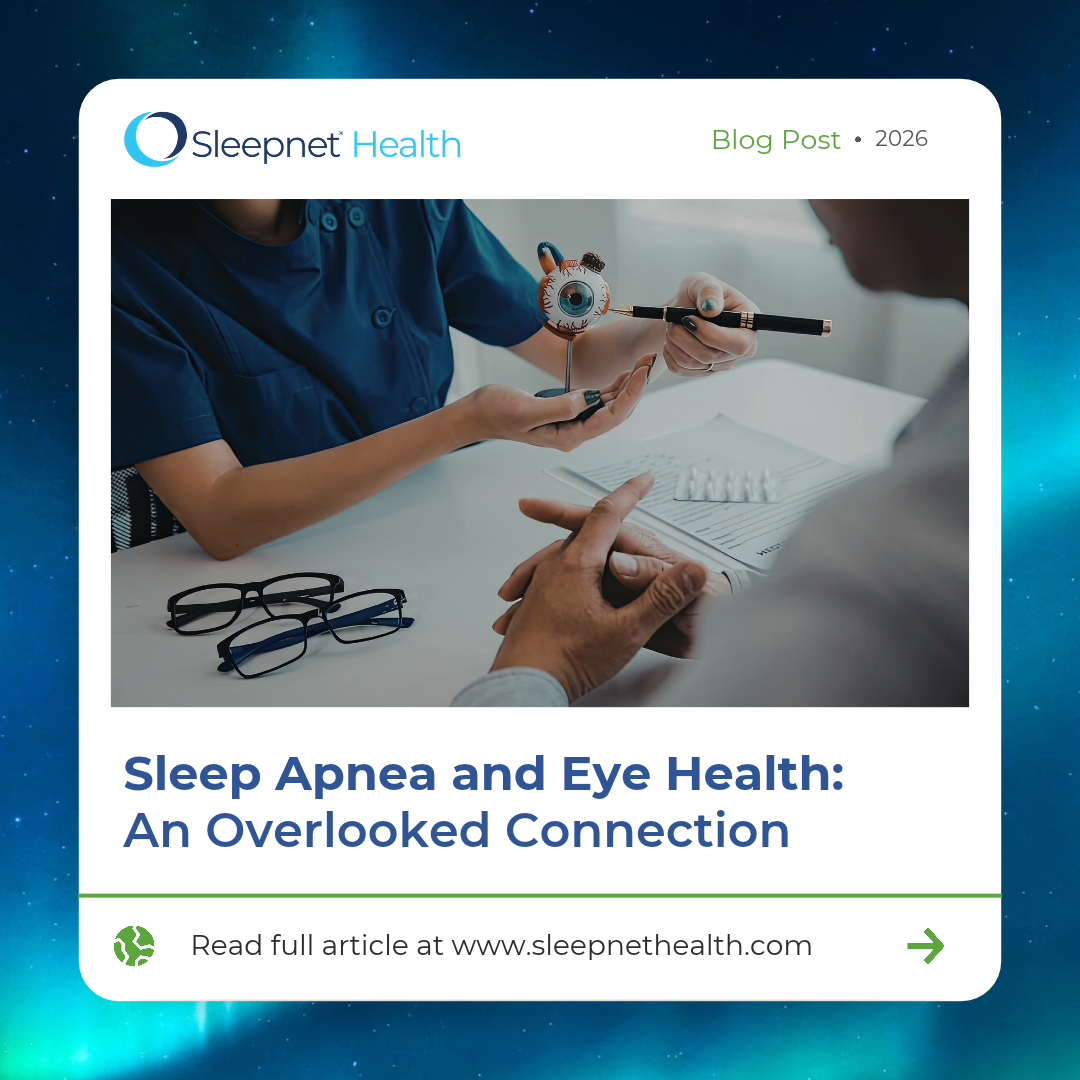
Sleep Apnea and Eye Health: An Overlooked Connection
When we think about the effects of obstructive sleep apnea (OSA), symptoms like loud snoring, daytime fatigue, and difficulty concentrating may come to mind first. Over time, untreated sleep apnea can also affect health beyond sleep, with well-established connections to cardiovascular and metabolic health.
But there is another area researchers have explored that may be less familiar: eye health.
Obstructive sleep apnea causes repeated episodes of partial or complete airway obstruction during sleep. These interruptions can lead to intermittent drops in blood oxygen levels, fragmented sleep, and changes throughout the cardiovascular system. Because the eyes rely on a consistent supply of oxygen-rich blood, researchers have investigated associations between OSA and several ocular conditions.
Why Could Sleep Apnea Affect the Eyes?
During an obstructive sleep apnea event, the airway becomes narrowed or blocked, temporarily reducing or stopping airflow. As these events occur repeatedly throughout the night, blood oxygen levels may fall and rise again—a pattern known as intermittent hypoxia (PubMed 2016, “OSA and Vascular Diseases”).
These fluctuations can contribute to oxidative stress, inflammation, and changes in vascular function. The retina and optic nerve are highly vascular tissues, making the potential relationship between sleep-disordered breathing and eye health an important area of ongoing research.
While having an eye condition does not necessarily mean someone has sleep apnea—and having sleep apnea does not mean someone will develop an eye condition—research has identified associations worth understanding.
Obstructive Sleep Apnea and Glaucoma
One of the most widely studied connections involves glaucoma, a group of eye diseases that can damage the optic nerve and potentially lead to vision loss.
Studies have found an association between OSA and an increased risk of glaucoma. Researchers have proposed several possible mechanisms, including repeated reductions in oxygen levels and changes in blood flow that may affect the optic nerve (PubMed Central 2024, “Association Between OSA and Glaucoma”).
Importantly, this does not mean OSA directly causes glaucoma. Both conditions have multiple risk factors, and research continues to explore exactly how they may be connected.
Because glaucoma can progress without noticeable symptoms in its early stages, routine comprehensive eye examinations remain an important part of preventive healthcare—particularly for individuals with known risk factors.
Floppy Eyelid Syndrome and Sleep Apnea
Another notable connection involves floppy eyelid syndrome (FES).
FES is characterized by unusually loose or easily everted upper eyelids. People with the condition may experience irritation, redness, dryness, discharge, or discomfort, particularly after sleeping (American Academy of Ophthalmology 2021, “Floppy Eyelid Syndrome”).
Research has demonstrated an association between FES and obstructive sleep apnea, although the exact relationship is still being studied. Because of this association, the presence of floppy eyelid syndrome may sometimes prompt healthcare professionals to consider whether screening for OSA is appropriate, particularly when other symptoms of sleep apnea are present (Survey of Ophthalmology 2023, Association Between OSA and Floppy Eyelid Syndrome”).
Sleep Apnea and Retinal Health
The retina, located at the back of the eye, converts light into signals that allow the brain to create the images we see. Like other tissues throughout the body, it depends on an adequate blood supply and oxygen supply (Cleveland Clinic 2024, “Retina”).
Researchers have investigated relationships between OSA and changes involving retinal blood vessels and other retinal conditions. Intermittent hypoxia and vascular changes associated with sleep apnea are among the mechanisms being studied (PubMed Central 2023, “Ocular Manifestations of OSA”).
Research has also explored possible relationships between OSA and retinal conditions, including retinal vascular disease and diabetic retinopathy. Findings regarding diabetic retinopathy have been mixed, however, and factors such as diabetes, hypertension, age, and cardiovascular health can complicate these relationships (PubMed Central 2020, “Retinal Vascular Manifestations of OSA”). More research is needed to better understand whether and how OSA independently contributes to retinal disease.
Could Eye Symptoms Point to Undiagnosed Sleep Apnea?
An eye condition by itself cannot diagnose obstructive sleep apnea. However, certain findings may provide another opportunity for healthcare professionals to recognize patients who could benefit from further evaluation.
That becomes especially relevant when eye concerns occur alongside common signs and symptoms of OSA, such as:
- Loud, persistent snoring
- Pauses in breathing observed during sleep
- Gasping or choking during the night
- Excessive daytime sleepiness
- Morning headaches
- Difficulty concentrating
- Waking frequently throughout the night
- Waking with a dry mouth
If sleep apnea is suspected, a healthcare provider can determine whether further evaluation or a sleep study may be appropriate (Cleveland Clinic 2025, “Sleep Apnea”).
Looking Beyond a Better Night’s Sleep
The effects of obstructive sleep apnea can extend beyond feeling tired the next morning. As researchers continue to learn more about how sleep-disordered breathing interacts with different systems throughout the body, the potential relationship between sleep apnea and eye health provides another reason to pay attention to the quality of our sleep.
Recognizing the symptoms of OSA, receiving an appropriate diagnosis, and following a recommended treatment plan can be important steps toward supporting better sleep and long-term health.
If you are experiencing symptoms of sleep apnea or have concerns about your sleep, talk with a qualified healthcare professional about whether further evaluation is right for you.